

What is the energy savings potential of flexible high - speed doors?
Jan 20, 2026
Leave a message
Hey there! As a supplier of Flexible High-Speed Doors, I've been getting a ton of questions lately about the energy savings potential of these doors. And let me tell you, it's a topic that's super important, not just for saving some bucks on your energy bills but also for doing our part for the environment. So, I thought I'd dive into it and share what I know.
First off, let's talk about what we're dealing with here. Flexible high-speed doors are, well, flexible and they can open and close really fast. This speed is key when it comes to energy savings. Picture a traditional door that takes ages to open and close. Every time it's open, there's a huge exchange of air between the inside and outside. In a cold climate, warm air from inside rushes out, and cold air gets in. In a hot climate, it's the opposite - cool air escapes, and hot air infiltrates. This constant air exchange means your heating or cooling system has to work overtime to keep the indoor temperature stable, which eats up a whole lot of energy.
Now, flexible high-speed doors can open and close in just a few seconds. This drastically reduces the amount of time that air can move between the inside and outside. For example, in a warehouse environment where forklifts are constantly going in and out, a slow door would leave the opening exposed for a long time, leading to significant energy losses. But with a high-speed door, the opening and closing are so quick that the air exchange is minimized. This means that your HVAC system doesn't have to work as hard, resulting in lower energy consumption.
Another aspect to consider is the insulation properties of these doors. Most flexible high-speed doors are made with materials that have good insulation qualities. For instance, the PVC material used in many High Speed PVC Door models provides a decent barrier against heat transfer. This additional insulation helps to keep the indoor environment stable, further reducing the load on your heating and cooling equipment.
Let's take a look at some real-world examples. In a food processing facility, maintaining a specific temperature is crucial for food safety. A slow door would allow warm, humid air from the outside to enter the cold storage area, causing the refrigeration system to work harder to bring the temperature back down. However, a flexible high-speed door can keep the cold storage area well-sealed, reducing the energy needed to maintain the low temperature. This not only saves energy but also helps to preserve the quality of the food products.
In a manufacturing plant, where there are different temperature zones for various production processes, flexible high-speed doors can be used to separate these zones. This prevents the mixing of air between zones, allowing each zone to maintain its optimal temperature with less energy consumption. For example, a hot work area can be isolated from a cooler testing area, reducing the need for excessive heating or cooling in each area.
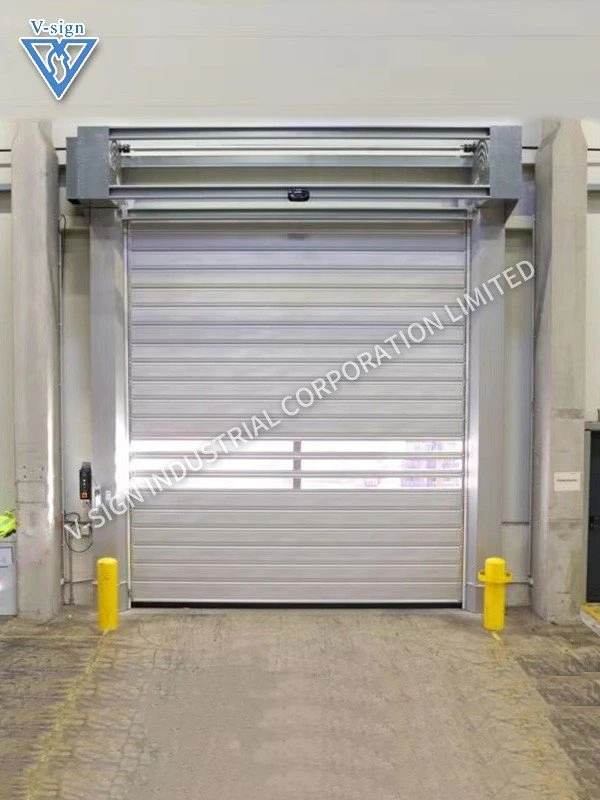
The Industrial Rapid Spiral Door is another type of flexible high-speed door that offers excellent energy savings. Its spiral design allows for a tight seal when closed, minimizing air leakage. This is especially important in areas where there are high winds or pressure differentials. The door can quickly open and close, ensuring that the indoor environment remains stable even in challenging conditions.
The PVC High Speed Rolling Shutter Door is also a popular choice for energy savings. It's lightweight and can be operated at high speeds, reducing the time the door is open. Plus, the PVC material is easy to clean and maintain, which is a big plus in industries where hygiene is important.
When it comes to calculating the energy savings potential, it's not a one-size-fits-all situation. The amount of energy you can save depends on several factors, such as the size of the door opening, the frequency of door usage, the temperature difference between the inside and outside, and the insulation properties of the door. However, studies have shown that in many cases, businesses can see a significant reduction in their energy bills after installing flexible high-speed doors.
For example, if you have a large warehouse with a door that's opened and closed 100 times a day, a slow door could result in a substantial amount of energy loss. But by switching to a flexible high-speed door, you could potentially save thousands of dollars in energy costs over the course of a year.
In addition to energy savings, flexible high-speed doors also offer other benefits. They can improve productivity by reducing the time it takes for vehicles and personnel to move in and out of a building. They also enhance safety by providing a clear view through the door (in some models) and by opening and closing quickly to prevent accidents.
So, if you're in the market for a new door for your facility and you're looking to save on energy costs, flexible high-speed doors are definitely worth considering. They offer a great way to reduce your carbon footprint while also saving money in the long run.
If you're interested in learning more about our flexible high-speed doors and how they can benefit your business, we'd love to have a chat. Feel free to reach out to us for a consultation or to get a quote. Let's work together to find the best door solution for your energy-saving needs.
References

- ASHRAE Handbook: HVAC Systems and Equipment. American Society of Heating, Refrigerating and Air-Conditioning Engineers.
- Energy Star Guidelines for Commercial Buildings. U.S. Environmental Protection Agency.
- "Energy Efficiency in Industrial Buildings" by Springer Publishing.
Send Inquiry