

What is the heat - preservation performance of a rapid rolling up door?
Jun 03, 2026
Leave a message
As a supplier of rapid rolling up doors, I am often asked about the heat - preservation performance of these remarkable doors. In this blog post, I will delve into the key factors that determine the heat - preservation capabilities of rapid rolling up doors, exploring the technology behind them and explaining why they are an excellent choice for maintaining a stable indoor temperature.
Understanding the Basics of Heat Transfer
To appreciate the heat - preservation performance of a rapid rolling up door, it's essential to understand the three primary modes of heat transfer: conduction, convection, and radiation.

Conduction is the transfer of heat through a solid material. When a door's material has high thermal conductivity, heat can easily move through it from a warmer area to a cooler area. For example, metal is a good conductor of heat, while insulators like certain plastics and foams have low thermal conductivity.
Convection involves the transfer of heat by the movement of fluids (liquids or gases). In a building, warm air can rise and escape through gaps or poorly sealed areas, and cold air can enter, leading to heat loss. A well - sealed rapid rolling up door can significantly reduce convective heat transfer.
Radiation is the transfer of heat through electromagnetic waves. Objects emit and absorb radiant heat based on their temperature and surface properties. Some materials can reflect or absorb radiant heat more effectively than others.
Factors Affecting the Heat - Preservation Performance of Rapid Rolling Up Doors
Door Material
The choice of material for a rapid rolling up door plays a crucial role in its heat - preservation capabilities.
- PVC (Polyvinyl Chloride): High Speed PVC Rolling Up Door are popular due to their lightweight and flexibility. PVC has relatively low thermal conductivity compared to metals, which means it is a better insulator. Additionally, modern PVC materials can be engineered with additives to further enhance their insulation properties. These doors are often used in environments where a balance between cost - effectiveness and heat preservation is required, such as warehouses and food processing facilities.
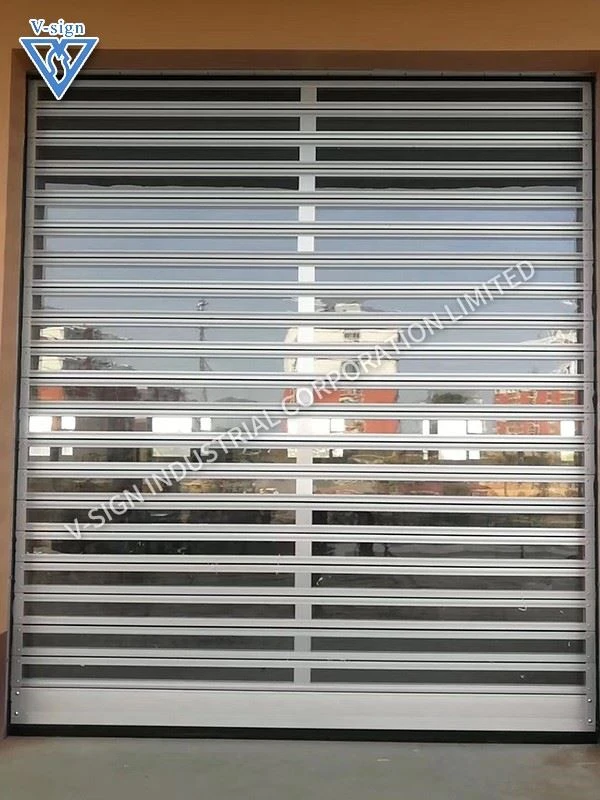
- Aluminum: Fast Aluminum Spiral Door offer high strength and durability. While aluminum is a metal and has a relatively high thermal conductivity, manufacturers can use thermal breaks in the door's design. A thermal break is a material with low thermal conductivity placed between the inner and outer layers of aluminum. This interrupts the heat path, reducing conductive heat transfer and improving the door's overall heat - preservation performance.
- Spiral - type Materials: High Speed Spiral Shutter Door are designed with a unique spiral structure. The materials used in these doors are carefully selected to provide both strength and insulation. The spiral design also helps to create a tight seal when the door is closed, minimizing air leakage and convective heat transfer.
Sealing Mechanisms
A well - sealed door is essential for preventing heat loss through convection. Rapid rolling up doors are equipped with various sealing mechanisms to ensure a tight fit when closed.
- Side Seals: Most rapid rolling up doors have side seals that run along the vertical edges of the door. These seals are typically made of rubber or a similar flexible material. They create a barrier between the door and the doorframe, preventing air from leaking in or out.
- Bottom Seals: The bottom seal of a rapid rolling up door is equally important. It can be designed to conform to the floor surface, even if it is uneven. Some bottom seals are made of brush strips or inflatable seals, which provide an effective barrier against air infiltration.
- Header Seals: The header seal at the top of the door also helps to prevent heat transfer. It ensures that there are no gaps between the door and the ceiling, which could allow warm air to escape or cold air to enter.
Door Speed
The speed at which a rapid rolling up door operates can also impact its heat - preservation performance. A fast - opening and closing door reduces the time during which the indoor and outdoor environments are exposed to each other.
- Minimizing Air Exchange: When a door opens and closes quickly, there is less time for warm or cold air to flow in and out of the building. For example, in a cold storage facility, a rapid rolling up door that can open and close in a matter of seconds can significantly reduce the amount of cold air that escapes when the door is in use.
- Energy Savings: By reducing the air exchange, a high - speed door helps to maintain a more stable indoor temperature. This, in turn, can lead to energy savings as the heating or cooling systems do not have to work as hard to compensate for the temperature fluctuations.
Measuring the Heat - Preservation Performance
There are several ways to measure the heat - preservation performance of a rapid rolling up door.
U - value
The U - value, also known as the thermal transmittance, measures the rate of heat transfer through a building component. A lower U - value indicates better heat - preservation performance. The U - value of a rapid rolling up door depends on factors such as the door material, insulation, and sealing. For example, a well - insulated PVC rapid rolling up door may have a U - value in the range of 1.5 - 2.5 W/(m²K), while a metal door with a thermal break could have a U - value in a similar or slightly higher range depending on its design.
R - value
The R - value is the reciprocal of the U - value and is a measure of the door's thermal resistance. A higher R - value means better insulation. When comparing different rapid rolling up doors, it's important to consider both the U - value and R - value to get a comprehensive understanding of their heat - preservation capabilities.
Applications and Benefits of Good Heat - Preservation in Rapid Rolling Up Doors
Industrial Buildings
In industrial settings such as warehouses, factories, and distribution centers, maintaining a stable indoor temperature is crucial. A rapid rolling up door with good heat - preservation performance can help to:
- Reduce Energy Costs: By minimizing heat loss or gain, the building's heating and cooling systems can operate more efficiently, leading to significant energy savings over time.
- Protect Goods and Equipment: Some products and equipment are sensitive to temperature changes. A well - insulated door can help to maintain a consistent temperature, protecting these assets from damage.
Cold Storage Facilities
Cold storage facilities rely on rapid rolling up doors with excellent heat - preservation capabilities to keep the interior temperature low.
- Prevent Frost Formation: A tight - sealing and well - insulated door can reduce the amount of warm, moist air that enters the cold storage area. This helps to prevent frost formation on the walls and equipment, which can improve the efficiency of the refrigeration system.
- Ensure Product Quality: Many perishable goods require strict temperature control. A high - performance rapid rolling up door can help to maintain the required temperature, ensuring the quality and safety of the stored products.
Food Processingplants
In food processing plants, maintaining a clean and controlled environment is essential. Rapid rolling up doors with good heat - preservation can:
- Meet Hygiene Standards: By reducing the influx of outdoor air, the door can help to prevent the entry of dust, dirt, and pests. This is important for maintaining the hygiene and safety of the food processing area.
- Save Energy: Similar to other industrial applications, a well - insulated door can reduce energy consumption by minimizing the need for heating or cooling.
Conclusion
The heat - preservation performance of a rapid rolling up door is determined by a combination of factors, including the door material, sealing mechanisms, and operating speed. Our company offers a range of High Speed Spiral Shutter Door, Fast Aluminum Spiral Door, and High Speed PVC Rolling Up Door that are designed to provide excellent heat - preservation capabilities. These doors are suitable for a variety of applications, from industrial warehouses to cold storage facilities and food processing plants.
If you are interested in improving the heat - preservation of your building and reducing energy costs, we invite you to contact us for more information and to discuss your specific requirements. Our team of experts is ready to help you choose the right rapid rolling up door for your needs.
References
- ASHRAE Handbook of Fundamentals. American Society of Heating, Refrigerating and Air - Conditioning Engineers.
- Building Energy Codes and Standards. International Code Council.
- Technical literature from rapid rolling up door manufacturers.
Send Inquiry